How to Write a Blog Post That Actually Ranks in 2026
If you think the point of a business blog is to sell your products, you're going to be disappointed. Most business blogs fail, and this misunderstanding is usually why.
Blog posts don't convert visitors into customers directly. That's not their job. Their job is to build authority, earn backlinks, and signal to Google that your website deserves to rank. The sales happen later, after you've built trust.
Let me explain how this actually works and how to write posts that do what they're supposed to do.
Why Blogging Works (It's Not What You Think)
When another website links to yours, Google treats that as a vote of confidence. These links are called backlinks, and they're one of the most important ranking factors in search.
According to Backlinko's analysis of 11.8 million search results (opens in a new tab), the number of domains linking to a page correlates with higher rankings more than almost any other factor. Pages ranking #1 have an average of 3.8x more backlinks than pages ranking #2 through #10.
Here's the problem: nobody links to your services page. Nobody links to your "About Us" page. People link to useful content that helps them make a point or supports their own writing.
That's what blog posts are for. You create something genuinely useful, other sites link to it, and Google rewards your entire domain with more authority. Your services pages rank higher because your blog earned the trust.
What this means for you: Stop thinking of blog posts as sales pitches. Think of them as assets that earn credibility over time.
How blog posts build authority: useful content earns backlinks, which builds domain trust, which helps all pages rank higher
What "Thin Content" Means and Why It Fails
Google's helpful content guidelines (opens in a new tab) are clear: content should demonstrate "first-hand expertise and a depth of knowledge." Surface-level posts that could have been written by anyone don't meet that standard.
This ties into something Google calls E-E-A-T: Experience, Expertise, Authoritativeness, and Trustworthiness. According to Google's quality rater guidelines (opens in a new tab), these are the criteria their systems use to evaluate whether content deserves to rank. Trust is the most important factor. Content that demonstrates real experience and expertise earns more trust than generic advice anyone could write.
Thin content is the industry term for posts that fail this test. A 300-word overview of a topic that's been covered better elsewhere. A list of tips you could find on any other website. Content that exists to fill space rather than to help someone.
Google's systems are designed to identify and demote this kind of content. The March 2024 core update specifically targeted "low-quality, unoriginal content," and sites that relied on thin posts saw significant ranking drops.
In practice, comprehensive posts tend to earn more backlinks than short, surface-level articles because they give other sites more useful details to reference.
This doesn't mean longer is always better. It means you need enough depth to actually be useful. For most topics, that's somewhere between 1,500 and 2,500 words.
How to Structure a Blog Post
Structure matters as much as length. A 2,000-word wall of text is just as useless as a 300-word nothing.
Word Count
Aim for 1,500 to 2,500 words for most posts. Under 1,000 words rarely provides enough depth to rank. Over 3,000 words works for comprehensive guides but isn't necessary for every topic.
The goal isn't hitting a number. It's covering the topic thoroughly without padding.
Short Paragraphs
Keep paragraphs to 2-4 sentences. Large blocks of text are hard to read on screens, especially phones.
Look at how news sites and successful blogs format their content. Short paragraphs. Plenty of white space. Easy to scan.
Subheadings
Break your content into sections with clear subheadings (H2s and H3s). This helps readers find what they need and helps Google understand what your post covers.
A good rule: add a subheading every 200-300 words. If you're writing a 2,000-word post, that's roughly 7-10 sections.
Images
Include 1-3 images per post. They break up text, make the page more visually engaging, and give you another opportunity to rank (through Google Image search). Our guide to optimizing images with WebP covers format choices and compression.
Every image needs alt text. This is the description that appears if the image doesn't load, and it's what screen readers use for accessibility.
Write alt text that describes what the image shows and why it matters. "Chart showing backlink correlation with rankings" is useful. "Image1.png" is not.
Writing Style
Write like you talk. Short sentences. Plain language. No jargon unless you explain it.
Read your post out loud. If you stumble over a sentence, rewrite it. If something sounds like a corporate memo, cut it.
Backlinks: Linking Out to Other Sites
Here's something that confuses business owners: linking to other websites helps you, not just them.
When you cite sources, you're showing Google that your content is well-researched. You're demonstrating the expertise and trustworthiness that E-E-A-T rewards.
Think about it from Google's perspective. A post that makes claims without sources could be making things up. A post that links to research, official documentation, and authoritative sites is verifiable.
Good sources to link to:
- Research and statistics: Studies, surveys, industry reports
- Official documentation: Google's own guidelines, government sites, industry standards
- Authoritative publications: Major news outlets, respected industry sites
Don't link to competitors or low-quality sites. Do link to sources that support your points and add credibility.
The other benefit: when you consistently create well-researched content, other sites start linking back to you. That's how you earn backlinks over time. You become a source worth citing.
Internal Links: Connecting Your Own Content
Internal links are links from one page on your site to another page on your site. They're different from backlinks (which come from other websites), but they matter for two reasons.
First, they help Google understand your site structure. When you link from a blog post to your services page, or from one post to a related post, you're telling Google how your content connects. This helps Google crawl your site more effectively and understand what pages are most important.
Second, they keep visitors on your site longer. If someone reads your post and finds a link to another relevant article, they might click it. More time on site, more pages viewed, more chances to build trust.
Even one or two internal links per post helps. Use natural anchor text that describes what you're linking to. "Learn more about website performance" is better than "click here."
The AI Content Problem
AI can write blog posts. It's 2026. Everyone knows this.
The question isn't whether AI can produce words. It's whether those words are worth reading. And increasingly, the answer is no.
Google's guidance on AI-generated content (opens in a new tab) focuses on quality, not method. They don't penalize AI content for being AI content. They penalize content that's unhelpful, regardless of how it was made.
The problem is that most AI-generated content is unhelpful. It's generic. It lacks original insight. It sounds like everything else.
What AI Content Gets Wrong
AI writing has tells. Once you know them, you see them everywhere:
Em dashes for drama. "This changes everything — and here's why." AI loves em dashes. It uses them constantly, often in places where a period would work better.
Filler openings. "In today's digital landscape..." or "In the ever-evolving world of..." These phrases say nothing.
They're throat-clearing before the actual content starts.
Buzzword stacking. "Leverage this robust, seamless solution to unlock your potential." Real humans don't talk like this.
Hedge words everywhere. "This might possibly help you potentially achieve..." AI hedges because it's uncertain. Confident writing makes clear statements.
The same structure every time. Introduction, three to five points with similar formatting, conclusion that restates the introduction. Predictable and boring.
AI writing red flags: em dashes for drama, filler openings, buzzword stacking, hedge words, predictable structure
How to Avoid Sounding Like AI
Whether you use AI as a starting point or write everything yourself, edit ruthlessly:
- Cut "in today's" and "in the world of" openings
- Replace em dashes with periods unless you have a good reason
- Delete "leverage," "utilize," "robust," "seamless," and "unlock"
- Remove hedge words: "might," "possibly," "potentially" (unless genuinely uncertain)
- Vary your sentence length and structure
- Add specific examples and real numbers
- Include opinions and perspectives that AI wouldn't generate
The test: would a reader know a human wrote this? If your post could have been generated by typing the title into ChatGPT, it's not good enough.
Google is getting better at identifying AI-generated content, and more importantly, readers are getting better at recognizing it. The bland, generic, buzzword-filled posts that flooded the internet in 2023 and 2024 are exactly what Google's helpful content updates target.
Write something only you could write. That's the bar now.
The Bottom Line
Blog posts work when you understand their actual purpose:
- They earn backlinks by being genuinely useful to other writers and sites
- They build authority by demonstrating expertise over time
- They help your whole site rank by signaling trust to Google
A good blog post:
- Is long enough to be thorough (1,500-2,500 words for most topics)
- Uses short paragraphs and clear subheadings
- Links out to credible sources
- Links internally to your other content
- Includes images with proper alt text
- Sounds like a human wrote it
This isn't complicated. It just takes more effort than most businesses are willing to put in. That's actually good news for you. If you do it right, you'll stand out.
If you want your website to perform well in search, your blog posts need to perform well too. Everything connects. A post that earns backlinks improves your domain authority.
Better domain authority helps all your pages rank higher, including the ones that convert visitors into customers. If you're not sure whether your site is set up for this, our guide to Core Web Vitals explains the performance side.
Need Help With Your Content Strategy?
If you're not sure whether your blog is working for you, or you want to make sure new content is set up to succeed, we can take a look. We'll review your current content, explain what's working and what isn't, and give you a clear path forward.
Get a free content review: Contact us at info@ylx.ca
Analysis FAQ.
Why do business blogs fail?
Most business blogs fail because owners think the purpose is to sell products directly. Blog posts don't convert visitors into customers directly - they build authority, earn backlinks, and signal to Google that your website deserves to rank. Sales happen later after you've built trust.
How long should a blog post be for SEO?
Aim for 1,500 to 2,500 words for most posts. The average first-page Google result contains 1,447 words, and long-form content over 3,000 words earns 77% more backlinks than short articles. Under 1,000 words rarely provides enough depth to rank.
What is thin content and why does it fail?
Thin content is surface-level posts that could be written by anyone - 300-word overviews, generic tips, or content that fills space rather than helping someone. Google's systems demote thin content, and the March 2024 core update specifically targeted low-quality, unoriginal content.
Why are backlinks important for blog posts?
Backlinks are one of the most important ranking factors. Pages ranking #1 have 3.8x more backlinks than pages ranking #2-10. Nobody links to services or About pages - they link to useful blog content that helps them make a point. Your blog earns credibility that helps your entire domain rank higher.
Tagged with

Further Reading
Related Analysis.
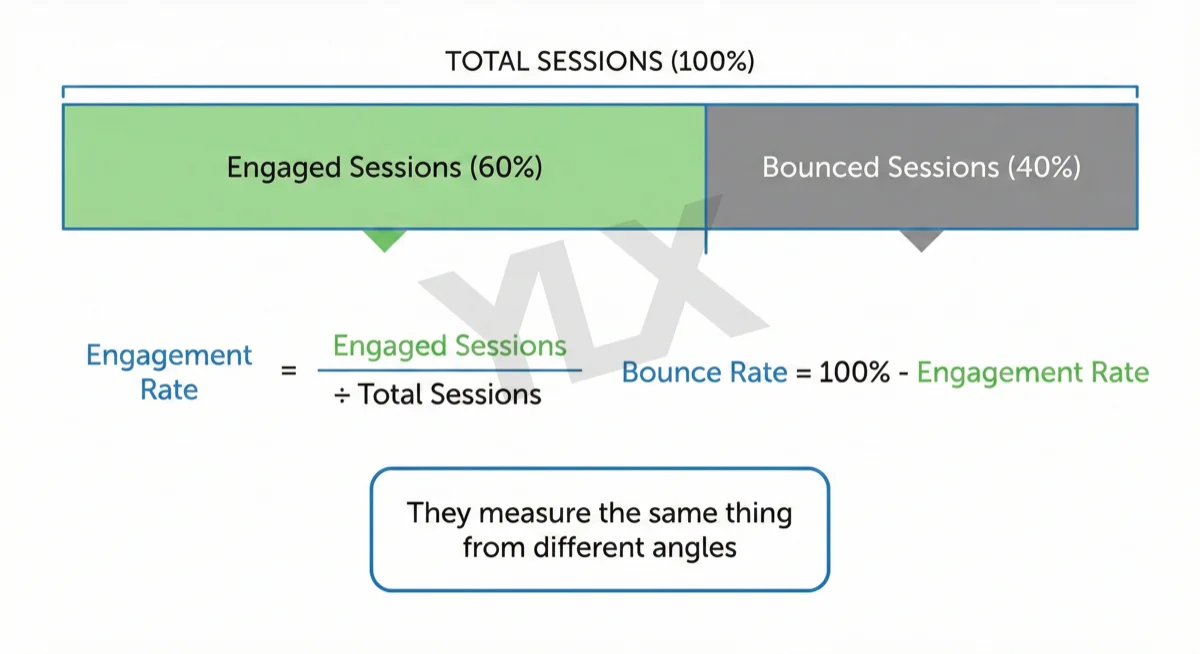
What Is Engagement Rate? The Metric That Shows What Works
Engagement rate measures visitor interaction on your site. Learn what counts as engaged in GA4, what good rates look like, and how to improve yours in 2026.
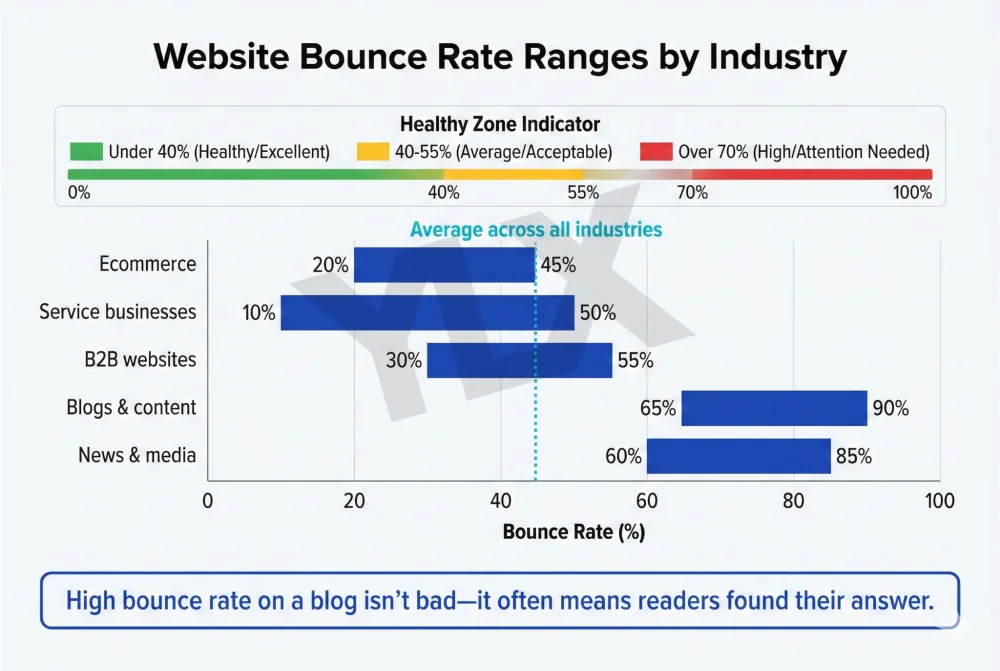
What Is Bounce Rate and When It Matters for Your Site
Bounce rate shows if visitors engage or leave. Learn what counts as a bounce in GA4, when high rates signal problems, and how to keep visitors engaged.
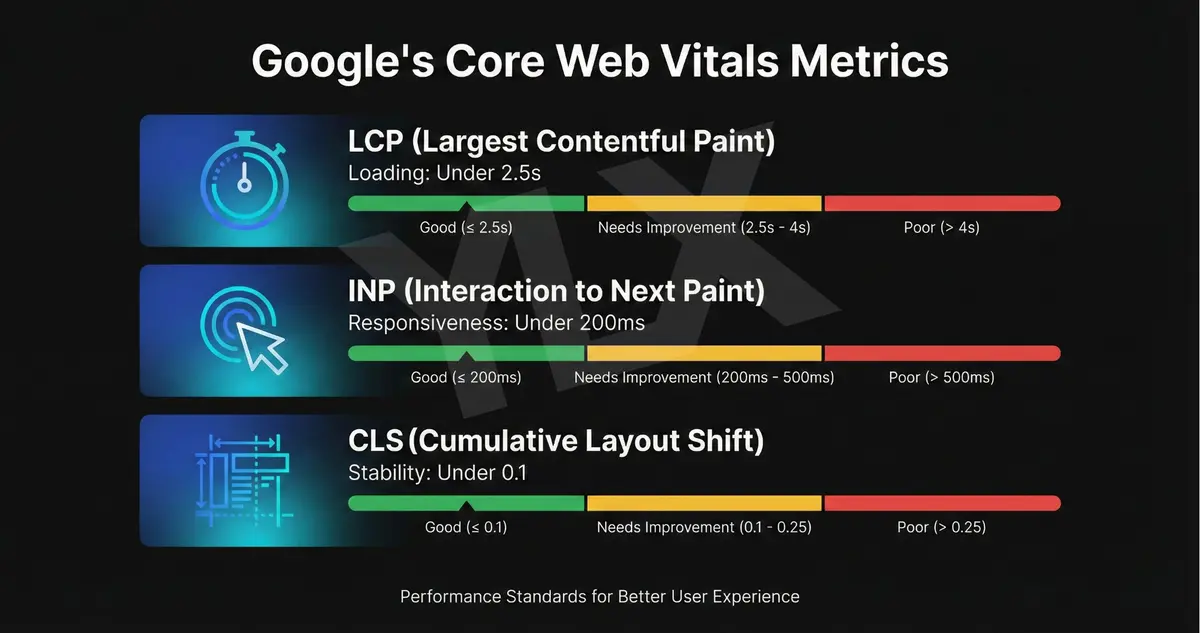
Why Core Web Vitals Matter for Your Business Website
Google uses Core Web Vitals to rank websites. Learn what they measure, why half of sites fail, and how speed directly affects your customers and revenue.