What Is NAP? Why Your Business Info Must Match Everywhere
Your business is listed on Google, Yelp, Facebook, and a dozen directories you forgot you signed up for. If the phone number on one doesn't match the address on another, you have a problem.
Google notices. Customers notice. And you lose business without realizing why.
NAP consistency is one of the simplest fixes in local SEO, but most businesses get it wrong. Let me explain what it is and how to fix it.
What NAP Means
NAP stands for Name, Address, and Phone Number. These three details are your business's identity online. They appear on your website, your Google Business Profile, social media pages, and every directory listing you've ever created.
A NAP citation is any online mention of your business that includes this information. (We have a deeper guide on what local citations are and why they matter.) Citations appear on:
- Your website (usually in the footer and contact page)
- Google Business Profile, Apple Maps, Bing Places
- Directories like Yelp, YellowPages, Foursquare
- Industry-specific directories (Angi, TripAdvisor, FindLaw)
- Chamber of commerce listings
- News articles, blog posts, press releases
The more places your NAP appears consistently, the more Google trusts that your business is real and legitimate. The more inconsistencies Google finds, the less confident it becomes about showing your business in search results.
Why Consistency Matters
Google uses NAP consistency as a trust signal. When your name, address, and phone number match across your website, Google Business Profile, and third-party directories, it reinforces your credibility. Google, Yelp, and Bing cross-reference this data constantly.
When there are discrepancies, Google has a problem. Which version is correct? Is this even the same business? Rather than risk showing users wrong information, Google becomes less likely to display your business prominently in local search results.
Citations remain an important ranking signal for both Local Pack and local organic visibility.
That might sound small, but local SEO is competitive. Small advantages compound. If your NAP is consistent and your competitor's isn't, you have an edge.
The Real-World Cost of Inconsistency
The pattern is straightforward. Consistent NAP helps local visibility and trust. Inconsistent NAP creates friction for both search engines and customers.
Even small mismatches can trigger wrong calls, missed leads, or weaker local pack performance over time.
How It Affects Customer Trust
Google isn't the only one who cares about your business information. Customers do too.
According to BrightLocal's research (opens in a new tab):
- 80% of consumers lose trust in a business if they see incorrect or inconsistent contact details online
- 68% would stop using a business if they found incorrect information in directories
- 36% called a wrong number for a local business in the last year
- 22% went to the wrong location because the address was incorrect online
These aren't minor inconveniences. A customer who calls the wrong number or drives to a closed location isn't coming back. They're going to your competitor.
The frustrating part is that you'd never know it happened. The customer doesn't call to complain. They just leave.
NAP inconsistency impact on customer trust and search rankings: 80% lose trust, 68% stop using business, 37% visibility increase after fixing
What Counts as Inconsistent
NAP consistency means exact matches. Not close enough. Exact.
These are different in Google's eyes:
- "123 Main St" vs "123 Main Street"
- "Suite 100" vs "#100" vs no suite number at all
- "(555) 123-4567" vs "555-123-4567" vs "5551234567"
- "Joe's Plumbing" vs "Joe's Plumbing LLC" vs "Joe's Plumbing & Heating"
Even minor variations can cause problems. Google's systems are getting better at recognizing that these might be the same business, but why make it guess? Every inconsistency introduces uncertainty.
The solution is to pick one format and use it everywhere. Write out "Street" or use "St."? Pick one.
Include the suite number? Always or never. Then audit every listing to make sure they match.
Data Aggregators: Where It Starts
Your business information doesn't just sit in isolated directories. It flows through data aggregators, which are companies that collect, verify, and distribute business data to hundreds of other platforms.
The major aggregators in the US and Canada are:
- Data Axle (formerly Infogroup)
- Neustar Localeze
- Foursquare (which absorbed Factual in 2020)
According to Whitespark's Local Search Ecosystem (opens in a new tab), these aggregators are the source of truth for hundreds of directories. If your data is wrong with an aggregator, that error propagates everywhere.
This is why fixing NAP issues one directory at a time often doesn't work. You fix Yelp, but the aggregator overwrites it with the old data next month. You need to fix it at the source.
How NAP data flows from aggregators to directories: Data Axle, Localeze, and Foursquare feed your business information to Google, Yelp, Apple Maps, and hundreds more
How to Audit Your NAP
Start by checking what's out there. Here's a simple process:
1. Google your business name. Look at what comes up. Check the Google Business Profile, any directory listings, and your own website.
Do they all match?
2. Search for variations. Try your business name plus an old phone number or old address. Try common misspellings.
You might find duplicate listings or outdated information you didn't know existed.
3. Check the major platforms manually. At minimum, verify your information on:
- Google Business Profile
- Apple Maps
- Bing Places
- Yelp
- Your own website
4. Use a citation tracking tool. Tools like BrightLocal's Citation Tracker (opens in a new tab) or Moz Local (opens in a new tab) can scan the web and identify inconsistencies you'd miss manually.
Once you have a list of problem listings, prioritize fixes by importance. Google Business Profile first, then major directories, then secondary sites. Our guide on how to optimize your Google Business Profile covers what else affects your local ranking beyond NAP.
Fixing the Problems
For directories you control (your website, social profiles), just update them. For third-party listings, you'll need to claim the listing and edit it, or contact the directory to request a correction.
Some tips:
Claim your listings. Most directories let you claim a business listing and take control of it. This is worth doing for any platform that appears in your local search results.
Fix aggregators first. Submit correct information to Data Axle, Localeze, and Foursquare. Changes will propagate to many other sites automatically over the following weeks.
Delete duplicates. If you find multiple listings for your business on the same platform, consolidate them. Duplicates dilute your citation authority and confuse customers.
Be patient. Some changes take 4-8 weeks to propagate through the system. Don't assume it didn't work just because you don't see immediate results.
Set up monitoring. Check your major listings quarterly. Business information can drift over time, especially if aggregators have old data.
NAP on Your Website
Your own website is the one place you have complete control. Make sure your NAP is:
Visible and consistent. The footer is the most common place, which puts it on every page. Make sure it matches your Google Business Profile exactly.
Crawlable. Don't put your address only in an image. Search engines can't read images. Use actual text.
Marked up with schema. LocalBusiness schema markup helps search engines understand your NAP data. According to Google's structured data documentation (opens in a new tab), this helps Google display your information accurately in search results.
Schema markup is a technical implementation, but it's a one-time setup. Our guide on what schema markup is and how to add it covers the details. Your web developer can add it, or if your site is built on a modern platform, there are plugins that handle it.
NAP and AI Search
Here's something new. Citation quality and consistency are drawing more attention as search interfaces evolve.
AI systems like Google's AI Overviews, ChatGPT, and others rely on consistent, verifiable business information from multiple sources. When your NAP is consistent across the web, AI systems are more confident recommending your business.
Presence on expert-curated "best of" lists and industry-specific directories now ranks as the #1 citation factor for AI search visibility. The fundamentals haven't changed. They've just become more important.
What We Check
When we build websites for local businesses, NAP consistency is part of the foundation. Here's what we do:
Consistent footer placement. Your name, address, and phone number appear on every page, formatted exactly as they appear in your Google Business Profile.
LocalBusiness schema. We add structured data markup so search engines can parse your business information accurately.
Google Business Profile alignment. We verify that your website matches your Google listing before launch.
We don't manage ongoing citation building or directory submissions, but we make sure your website isn't the source of inconsistencies. If you need help with broader citation management, we can point you to the right tools and services.
The Bottom Line
NAP is your business's name, address, and phone number. When these details match everywhere online, Google trusts your business more and shows it more prominently in local search. When they don't match, you lose visibility and customers.
The fix isn't complicated:
- Pick one exact format for your NAP and stick to it
- Claim your Google Business Profile and major directory listings
- Fix inconsistencies at the aggregator level when possible
- Put your NAP in your website footer and mark it up with schema
- Audit your listings quarterly
Most businesses see improved local rankings within 30-60 days of cleaning up their citations. The work is tedious, but the payoff is real.
Your competitors probably haven't done this. That's your opportunity.
Need Help With Local SEO?
If you're not sure whether your NAP is consistent or where to start fixing it, we can take a look. We'll check your Google Business Profile, review your website, and explain what we find in plain terms.
Get a free local SEO review: Contact us at info@ylx.ca
Analysis FAQ.
What does NAP mean in local SEO?
NAP stands for Name, Address, and Phone Number. These three details are your business's identity online and appear on your website, Google Business Profile, social media, and directory listings. Consistent NAP information across all platforms is a key ranking factor for local search.
Why does NAP consistency matter for local SEO?
Google uses NAP consistency as a trust signal. When your information matches across all platforms, Google trusts your business is legitimate. Inconsistencies confuse Google about which version is correct, making it less likely to show your business in local search results. Citations account for 7-10% of local pack ranking factors.
What happens if my NAP is inconsistent?
NAP inconsistencies can hurt both visibility and trust. Search engines become less confident about which listing details are correct, and customers may call the wrong number or visit the wrong location. BrightLocal research also shows many customers lose trust when they find incorrect business details.
What counts as a NAP citation?
A NAP citation is any online mention of your business that includes your name, address, and phone number. This includes your website, Google Business Profile, Apple Maps, Bing Places, directories like Yelp and YellowPages, industry-specific sites, chamber of commerce listings, and mentions in news articles or blog posts.
Tagged with

Further Reading
Related Analysis.
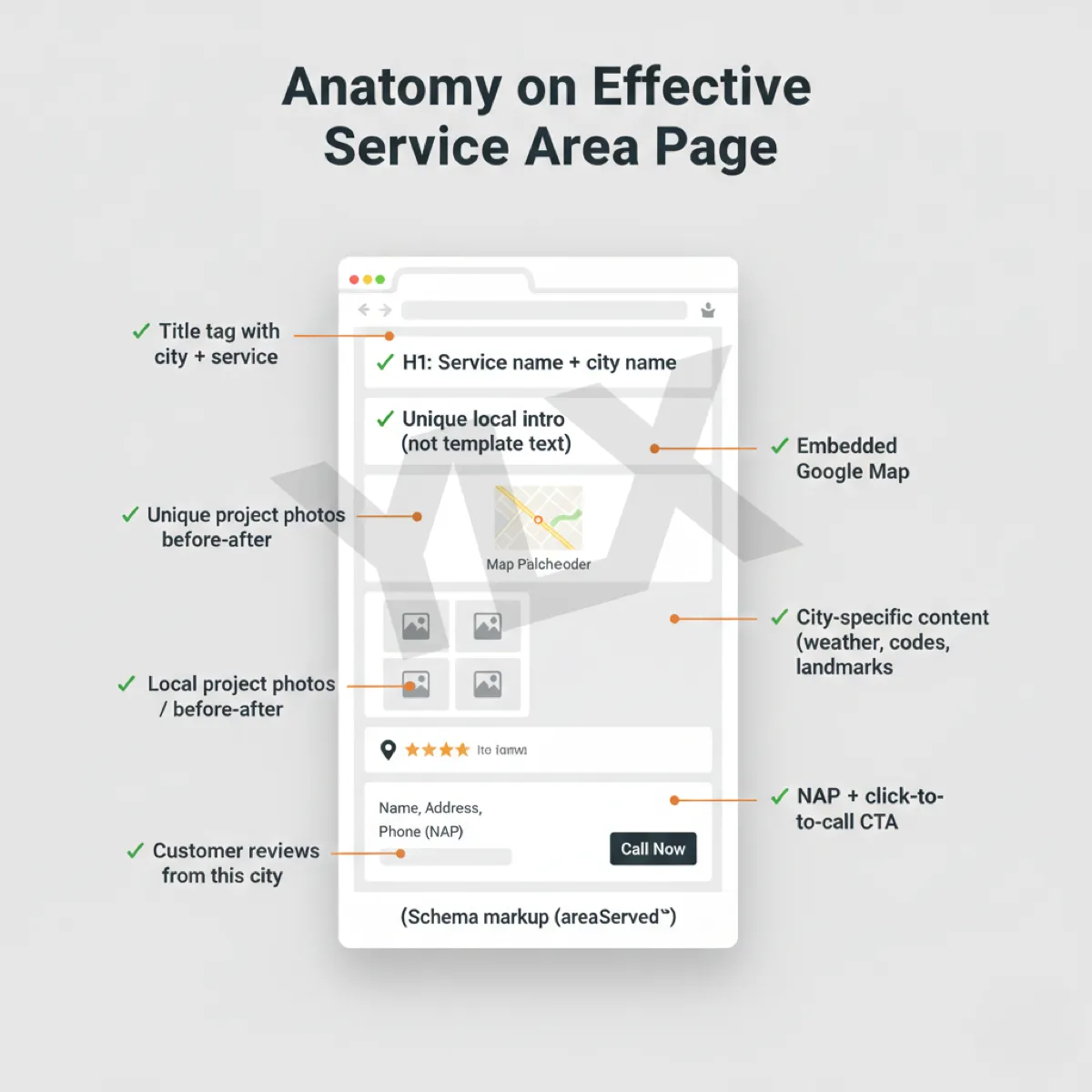
Service Area Pages: Local SEO Without a Storefront
Service area pages help businesses rank in cities they serve but don't have offices in. Learn how to build them right and avoid Google's doorway page penalty.
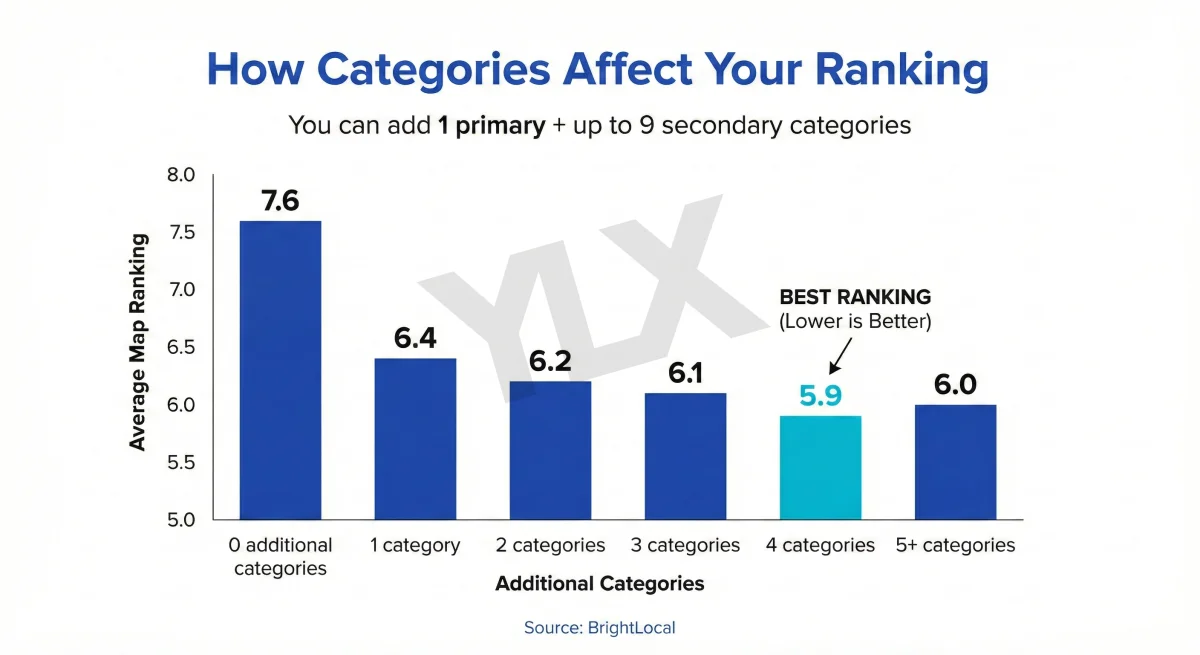
How to Optimize Your Google Business Profile (2026 Guide)
Your Google Business Profile is often the first thing customers see. Learn what actually affects your ranking and how to set up your profile correctly.
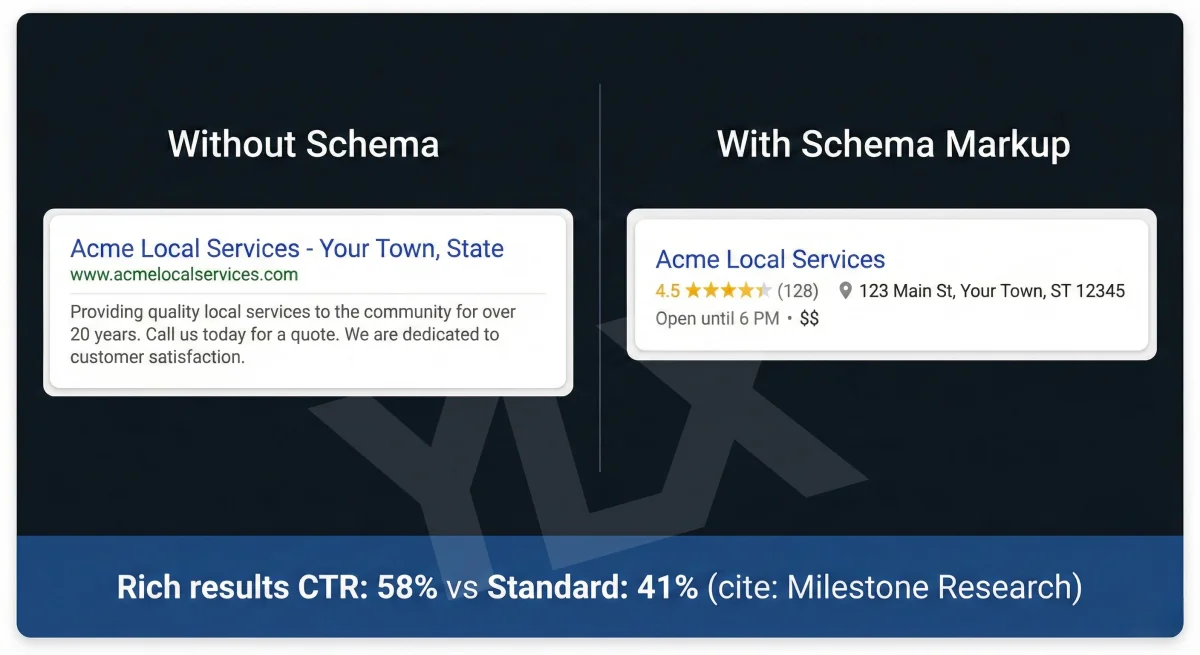
What Is Schema Markup? Structured Data for Local Business
Schema markup helps Google understand your business. Learn what it is, what properties matter, and how to add structured data to your local business website.